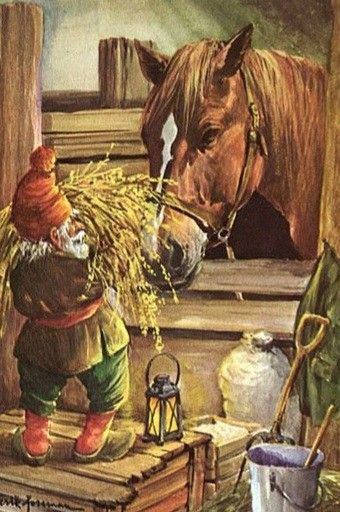
In the quiet corners of Scandinavian folklore lives a small but mighty figure: the Nisse (or Nisser in plural). Picture a short, bearded old man in a red or grey wool cap, no taller than a child, quietly watching over a farm after dark.
For centuries, Norwegian, Swedish, and Danish farmers believed a Nisse lived somewhere on the property; in the barn, the attic, or beneath the floorboards; protecting the home, the livestock, and the family's fortune. In return for this protection, families left out a bowl of porridge (often with a pat of butter on top) every night, especially around Christmastime. Forget the porridge, and the Nisse might turn mischievous — tangling animals' manes, misplacing tools, or causing minor chaos until respect was restored.
Unlike the jolly gift-givers we associate with modern Christmas elves, the Nisse is older, stranger, and far more tied to the land itself. He's less about giving gifts and more about keeping order; a guardian spirit bound to the rhythms of farm life, loyalty, and gratitude.
Today, the Nisse has softened into a beloved Christmas figure across Scandinavia, appearing on holiday cards and in Julenisse traditions. But his roots run deep into pre-Christian beliefs about household spirits and the unseen forces that protect a home.
Want to dive deeper into the legend, its origins, and how the Nisse is celebrated today? Watch the attached video to explore the full story! 🎥✨
The audio and images below are the ones featured in the video.Image Library




Comments
Post a Comment